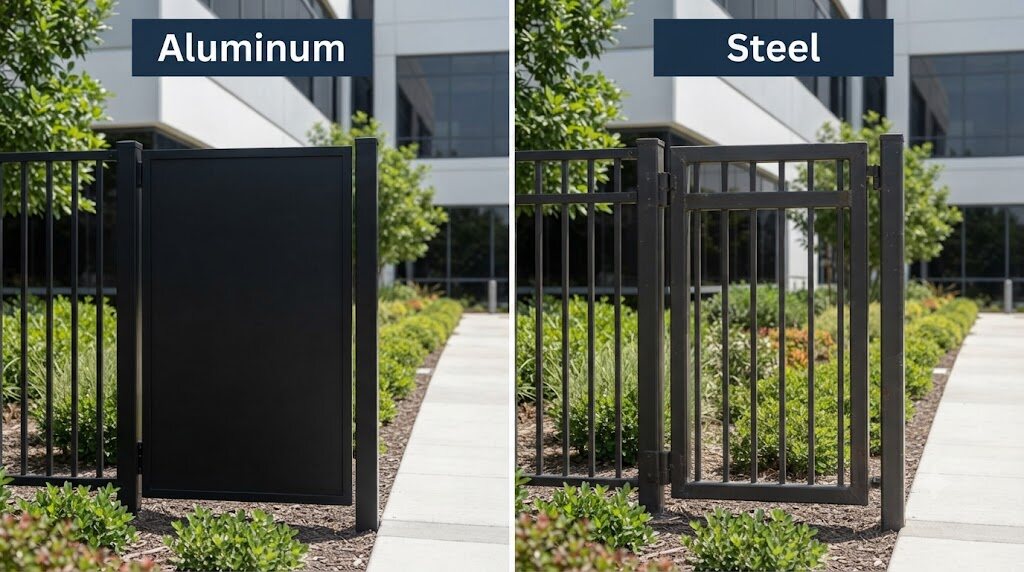
Aluminum vs steel fencing side by side comparison - aluminum fence panels vs steel fence panels.
Choosing between aluminum and steel fencing is one of the most common dilemmas faced by contractors, developers, and distributors. Both materials have distinct advantages, but the right choice depends on your project requirements, budget structure, and long-term maintenance strategy. This guide breaks down the key differences using real engineering data and practical field experience from over 15 years of manufacturing.
| Property | Aluminum (6063-T5) | Steel (Galvanized Q235) |
|---|---|---|
| Density | 2.7 g/cm³ | 7.85 g/cm³ |
| Corrosion Resistance | Excellent (natural oxide layer) | Moderate (zinc coating degrades) |
| Weight per Panel | ~8-12 kg | ~30-40 kg |
| Lifespan | 20-30 years | 10-15 years |
| On-Site Labor Required | Minimal (lightweight, single-person operation) | Significant (multi-person or equipment needed) |
| 20-Year Maintenance Cost | $0-2/m (cleaning only) | $11-20/m (rust treatment + repainting) |
Material Properties & Performance Comparison
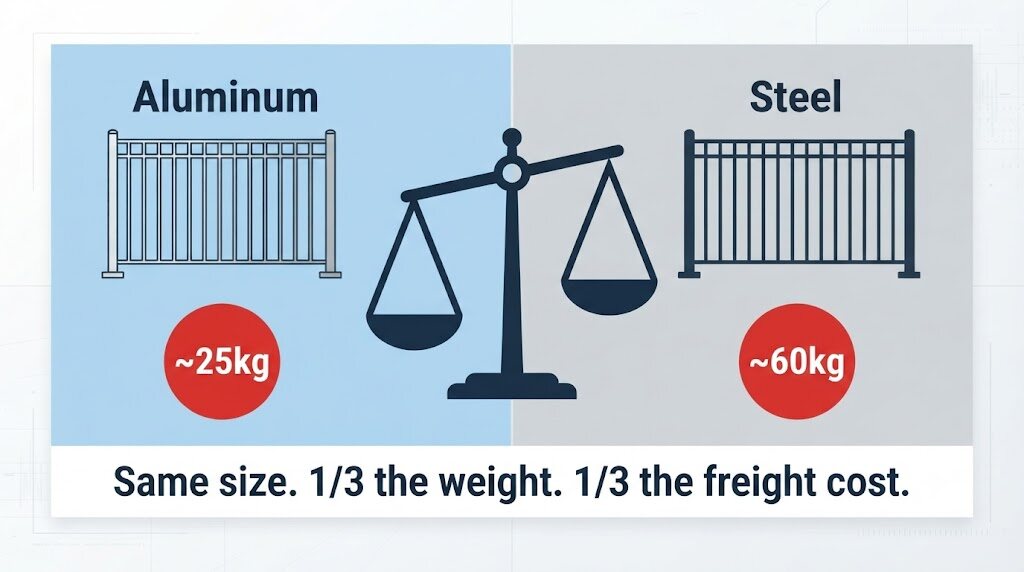
Weight comparison aluminum vs steel fencing - aluminum ~25kg vs steel ~60kg for the same panel size, roughly 1/3 the weight.
The fundamental difference between aluminum and steel fencing lies in their material properties. Our aluminum fencing uses 6063-T5 architectural-grade alloy, which offers an excellent strength-to-weight ratio. Steel fencing, typically made from galvanized Q235 or Q355 steel, provides higher raw tensile strength but comes with significant trade-offs.
Corrosion resistance is where aluminum truly excels. Aluminum naturally forms a protective oxide layer (Al2O3) that prevents further oxidation. Even if the powder coating is scratched, the underlying aluminum will not rust. Steel, even when galvanized, will eventually corrode once the zinc layer is compromised, especially in coastal or humid environments.
Thermal expansion is another factor. Aluminum expands about twice as much as steel under temperature changes. However, our modular fence system uses bolted connections with expansion gaps that accommodate this movement, preventing structural stress.
Cost Analysis: Upfront vs 20-Year Lifecycle
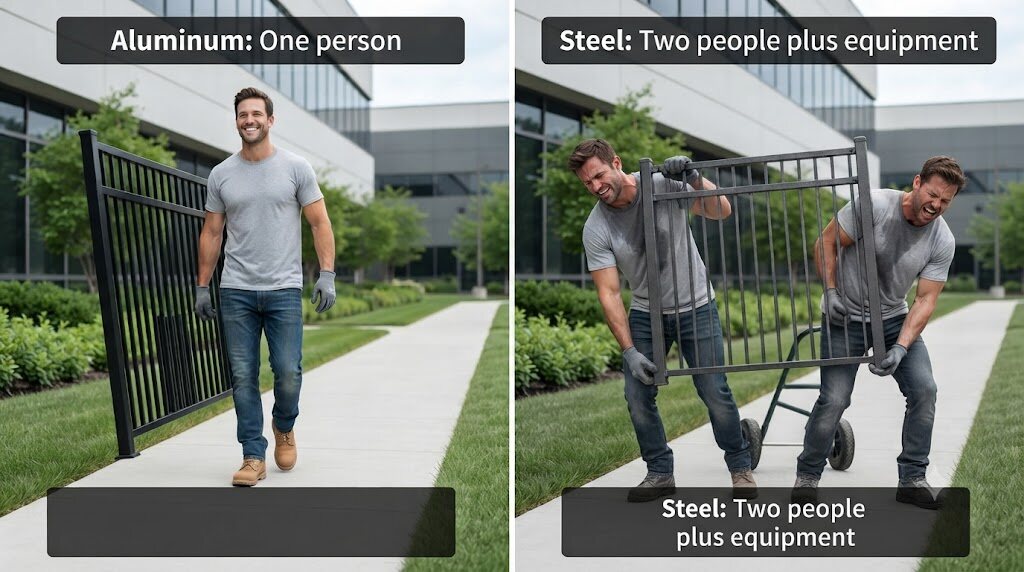
Installation labor comparison - one person handling aluminum panel vs two people plus equipment handling steel panel.
The cost comparison between aluminum and steel fencing must account for both initial procurement and long-term maintenance. While steel fencing typically has a 15-25% lower upfront material cost, the total cost of ownership over 20 years tells a very different story.
Year 0 (Initial Cost): Steel fencing wins on raw material price. A typical galvanized steel fence panel costs approximately $25-35 per linear meter, while aluminum panels range from $35-50 per linear meter. However, aluminum's lighter weight reduces shipping costs by 40-60%, partially offsetting the price difference.
Years 1-5: Minimal maintenance for both materials. Steel may require inspection of weld points for early signs of rust.
Years 5-10: Steel fencing typically requires its first major maintenance cycle: rust treatment, spot repainting, and hardware replacement. Estimated cost: $3-5 per linear meter. Aluminum requires only basic cleaning with soap and water.
Years 10-20: Steel fencing often needs a full repainting or even panel replacement in corrosive environments. Estimated cost: $8-15 per linear meter. Aluminum continues to perform with minimal upkeep.
20-Year Total Cost of Ownership: When combining initial cost, shipping, and maintenance, aluminum fencing is typically 15-25% cheaper over a 20-year lifecycle, especially in coastal, humid, or industrial environments.
Weight, Shipping & Installation Comparison
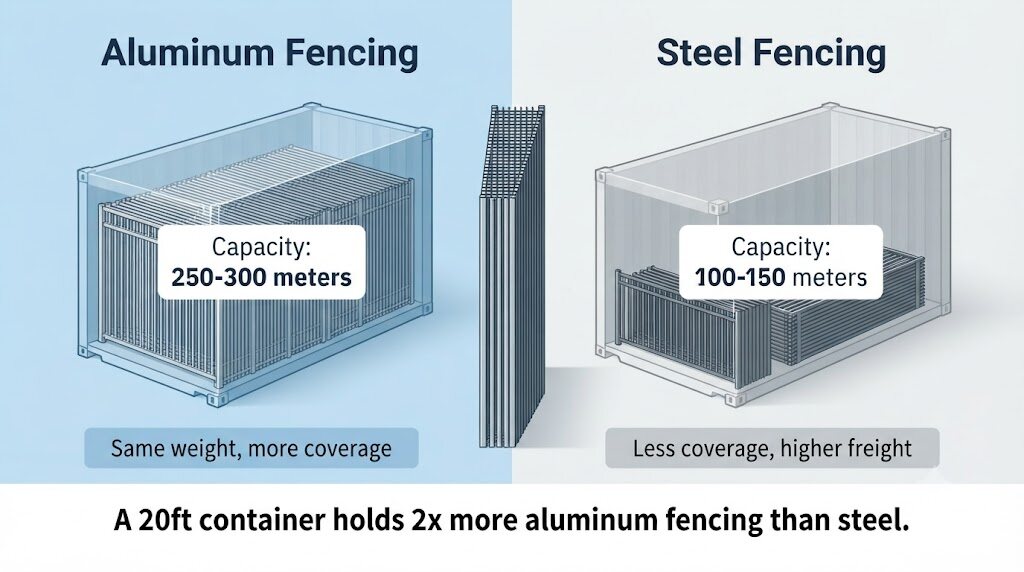
Container loading capacity comparison - aluminum fencing fits 250-300 meters vs steel 100-150 meters per 20ft container.
Aluminum weighs approximately 2.7 g/cm3, roughly one-third the density of steel (7.85 g/cm3). For fencing applications, this translates to aluminum panels weighing about 25-30% of equivalent steel panels. This dramatic weight difference has major implications for B2B logistics and installation.
Shipping efficiency: A standard 20-foot container can hold approximately 250-300 linear meters of modular aluminum fencing in flat-pack packaging. The same container would only fit about 100-150 meters of steel fencing. This means fewer shipments, lower freight costs, and reduced carbon footprint for aluminum projects.
Installation speed: Both aluminum and steel fencing arrive as pre-welded finished panels ready for direct installation. However, aluminum's lightweight nature means a two-person team can typically install 80-120 meters per day with minimal physical strain. Steel panels, while also pre-welded, weigh 3-4 times more, slowing installation to 40-60 meters per day and often requiring additional workers or lifting equipment on site.
On-site handling: Aluminum panels can be easily carried and positioned by one person, while steel panels often require two workers or lifting equipment. This reduces labor costs and improves safety on site.
Application Scenario Recommendations

Application scenarios: aluminum fencing for coastal villas, school perimeters, and apartment complexes.
Different projects have different requirements. Here is our practical recommendation based on application scenarios:
Choose Aluminum Fencing for:
• Coastal and high-humidity regions (Baltic coast, UK, Netherlands)
• Residential villas and premium properties requiring aesthetic appeal
• School and educational facility perimeters requiring low maintenance
• Apartment complexes with long perimeter runs
• Projects with tight installation schedules or limited on-site labor
• Areas with strict anti-corrosion requirements
Choose Steel Fencing for:
• Heavy-duty industrial sites requiring maximum impact resistance
• High-security facilities needing anti-climb and anti-cut properties
• Temporary fencing that will be relocated after short-term use
• Projects with very tight upfront budget constraints and no long-term maintenance budget
Hybrid Approach: Best of Both Worlds
Many successful projects use steel posts for structural strength combined with aluminum panels for corrosion resistance and aesthetics. This approach optimizes both cost and performance.
Steel posts driven into concrete footings provide the rigid structural backbone needed for tall fences and gate installations, while aluminum panels deliver the corrosion resistance, lightweight handling, and premium finish that clients demand. This hybrid strategy is particularly effective for large-scale commercial projects where budget optimization is critical without compromising on long-term durability.
For projects in coastal or high-humidity regions, the hybrid approach minimizes the surface area of steel exposed to corrosive elements, extending the overall system lifespan while keeping procurement costs manageable.
Frequently Asked Questions
Is aluminum fencing strong enough for commercial applications?
Yes. Our 6063-T5 aluminum alloy fencing with wall thicknesses of 1.4-2.0mm provides excellent structural performance for commercial applications. For high-security requirements, we offer reinforced profiles up to 2.5mm wall thickness that meet most commercial security standards.
How does the Polish market view aluminum vs steel fencing?
The Polish fencing market is shifting strongly toward aluminum. With the Polish fence market projected to grow at a 6.92% CAGR through 2031 and imports surging 35% in 2023-2024, aluminum fencing is gaining market share due to its low maintenance and modern aesthetics. Polish contractors in Warsaw, Krakow, and Wroclaw increasingly prefer aluminum for residential and commercial projects.
What about the German market (Aluminiumzaun)?
Germany has a well-established aluminum fencing tradition (known locally as Aluminiumzaun). German buyers value precision engineering and low-maintenance solutions, making aluminum the natural choice. Our products meet German quality expectations with tight tolerances and premium polyester-based powder coating (60-80μm).
Can I get wholesale pricing for bulk aluminum fencing orders?
Yes. As a direct factory manufacturer, we offer competitive wholesale pricing tiers. Trial orders start from 50 linear meters, with bulk orders exceeding 500 meters qualifying for volume discounts. Contact our B2B sales team for a customized quote.
What is the expected lifespan of aluminum vs steel fencing?
Properly powder-coated aluminum fencing typically lasts 20-30 years with minimal maintenance. Galvanized steel fencing lasts 10-15 years in moderate climates and 7-10 years in coastal or industrial environments before requiring significant maintenance or replacement.
Request a Custom Aluminum Fencing Quote
As a direct manufacturer with 15+ years of experience, we provide competitive wholesale pricing, CAD drawings, and technical support for B2B projects in Poland, Germany, and across Europe.
Get Your Free Quote